Ideal daily volume for the C6000 sits right where The Coffee Shop landed, the "sweet spot" for operations that have graduated past startup volume but aren't yet running an industrial floor.
Printing a label and applying it to a bag feels like one motion when you're doing 40 units for a Saturday market. It stops feeling that way at 400 units for a wholesale account with a Monday delivery window.
That's the part of scaling that rarely gets talked about printing on demand solves the "do we have the right label" problem, but it doesn't automatically solve the "how fast can we get labels onto bags" problem. If your team is printing labels, setting them aside, peeling backing paper by hand, and pressing each one onto a bag one at a time, you've traded a label-inventory bottleneck for a label-application bottleneck. Different problem, same effect on your Monday morning.
This is where the CW-C6000P earns its place in the lineup, not because it prints differently, but because of what happens the moment after printing.
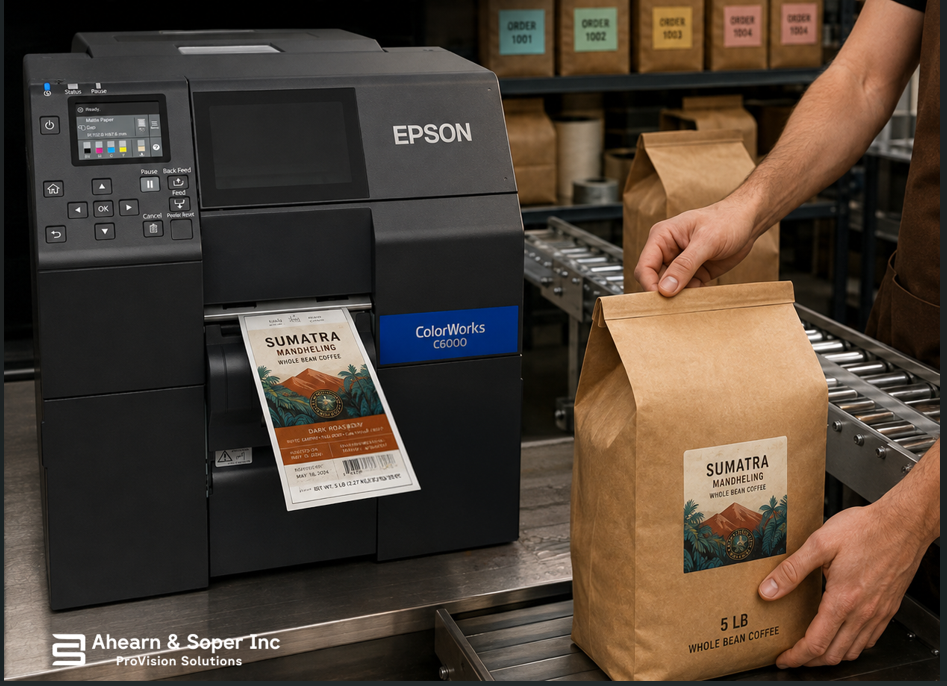
The C6000P is the first color inkjet label printer to offer a peel-and-present option, built for fast print-and-apply applications. Instead of printing a label onto backing that still must be manually peeled, the printer releases the label from its liner and presents it ready for application, with an integrated label-taking sensor that holds off printing the next label until the current one is removed.
In practice, that means one motion disappears from the workflow entirely. The label doesn't need to be peeled, it's already presented, ready to press onto the bag. What used to be "print, set aside, peel, apply" becomes "print, apply." That built-in peeler is designed specifically to reduce manual labor in the application step, not just the printing step.
A few seconds saved per label sounds trivial until you multiply it by the size of a wholesale order.
Take a 500-bag wholesale delivery. If manually peeling and positioning each label adds even three extra seconds per bag compared to a pre-peeled, ready-to-apply label, that's 25 minutes of labor on a single order, every time that account reorders. Across multiple wholesale accounts reordering weekly, that adds up to hours of labor a month spent on a step that peel-and-present removes almost entirely.
That's the real shift: peel-and-present doesn't change how fast the printer prints. The C6000P prints at speeds up to 5 inches per second, like the standard C6000A. What it changes is everything that happens after the label leaves the printer, the part of the process that was still manual even after you'd solved on-demand printing.
For a roaster whose wholesale business has grown to the point where labeling is a dedicated block of time on packing day rather than a quick task between other work, that's the bottleneck worth removing next.
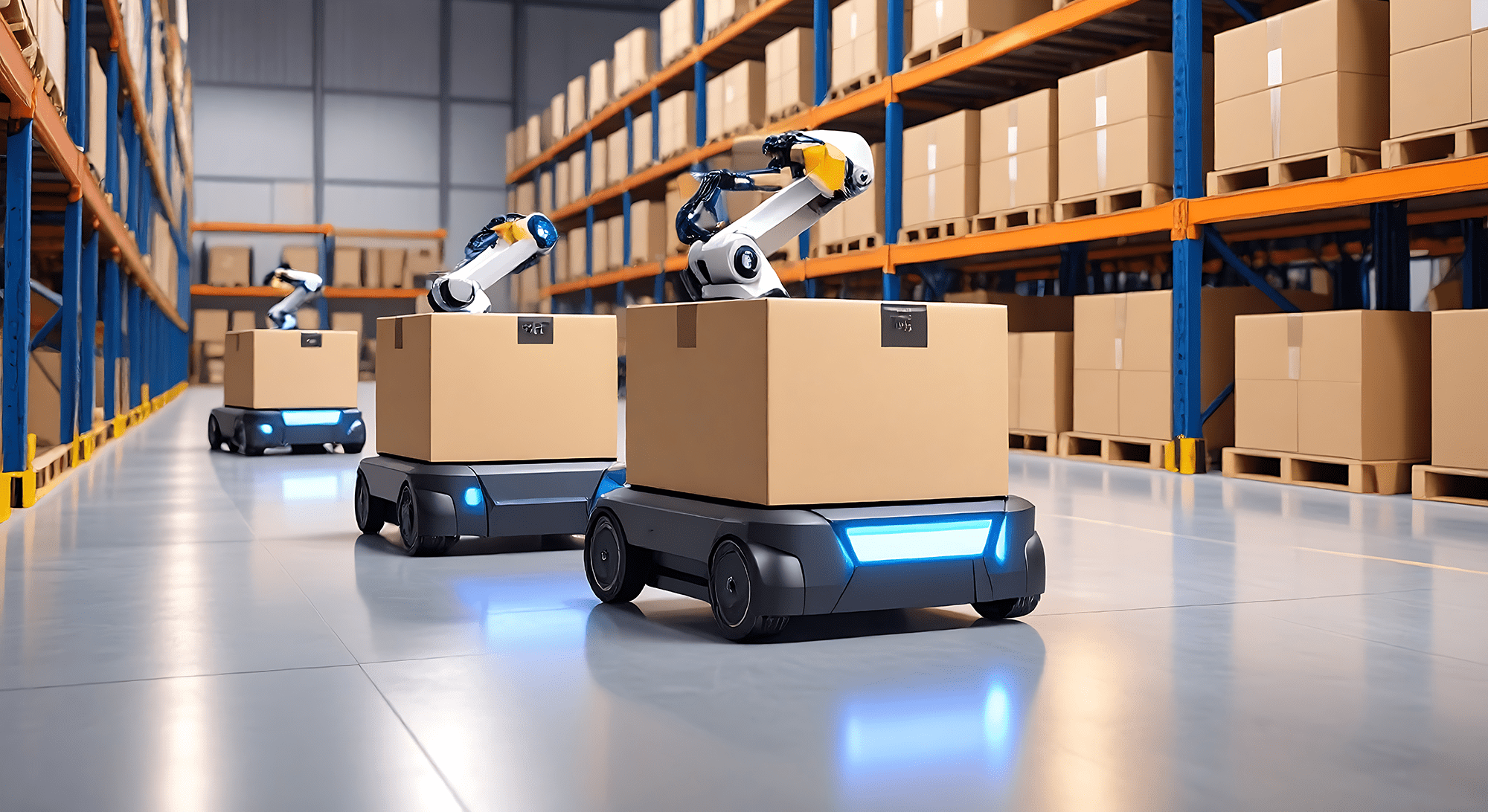
The peel-and-present design isn't just a hand-application convenience, it's built to scale further, when you need it to. The C6000P's peel-and-present capability, coupled with remote I/O control, is specifically designed to enable integration with an automated label applicator, letting the system print and apply labels without a person handling each one at all. All C6000-family printers include a general-purpose I/O port designed for mission-critical production, giving automation developers the control needed to integrate the printer into an automated workflow, reporting supply levels, status, faults, and readiness, and accepting inputs to pause, clean, or print.
That matters for a roaster thinking a few steps ahead. You don't need to invest in a full print-andapply automation system on day one. You can start with a person doing hand application off a peeland-present printer, already faster than peeling backing paper and add an automated applicator later if wholesale volume grows enough to justify it, without replacing the printer itself.
Not every roastery needs peel-and-present. If your labeling is still mostly retail bags moving through a POS at moderate volume, the standard auto-cutter C6000A likely covers you fine, the extra hardware and cost of the peel-and-present model isn't buying you much you'd notice.
The calculation changes once wholesale orders start driving meaningful volume through your packing line on a predictable schedule. If you can point to specific accounts placing regular, sizable orders, cases at a time, not bags at a time the labor time your team spends on manual label application for those orders is a real, recurring cost. Peel-and-present exists specifically to take a bite out of that cost, and it does so without asking you to change your printer platform, your label templates, or your compliance-ready media.
Choosing the peel-and-present model doesn't mean stepping outside the system you've already built. The C6000P delivers the same up to 1200 dpi resolution and compatibility with ZPL II, SAP, and major middleware as the rest of the ColorWorks C6000 family, and both gloss and matte ink options remain BS5609 certified for compliance-sensitive labeling. The templates and variable data workflow covered earlier in this series, roast dates, lot numbers, wholesale-specific branding carry over exactly as they do on the standard C6000A. The only thing that changes is what happens in the half-second after the label prints.
Ahearn & Soper Inc. provides expert consultation to identify the right solution for specific needs, including whether your wholesale order volume has reached the point where peel-and-present pays for itself in labor time saved and whether a hand-applied or automated setup makes more sense for where your operation is today.
Wondering whether peel-and-present would save your team time? Talk to us about your current wholesale order volume, and we'll help you figure out whether the C6000P is worth the switch.
Browse more practical insights connected to warehouse management, automation, labelling, mobility, and support.