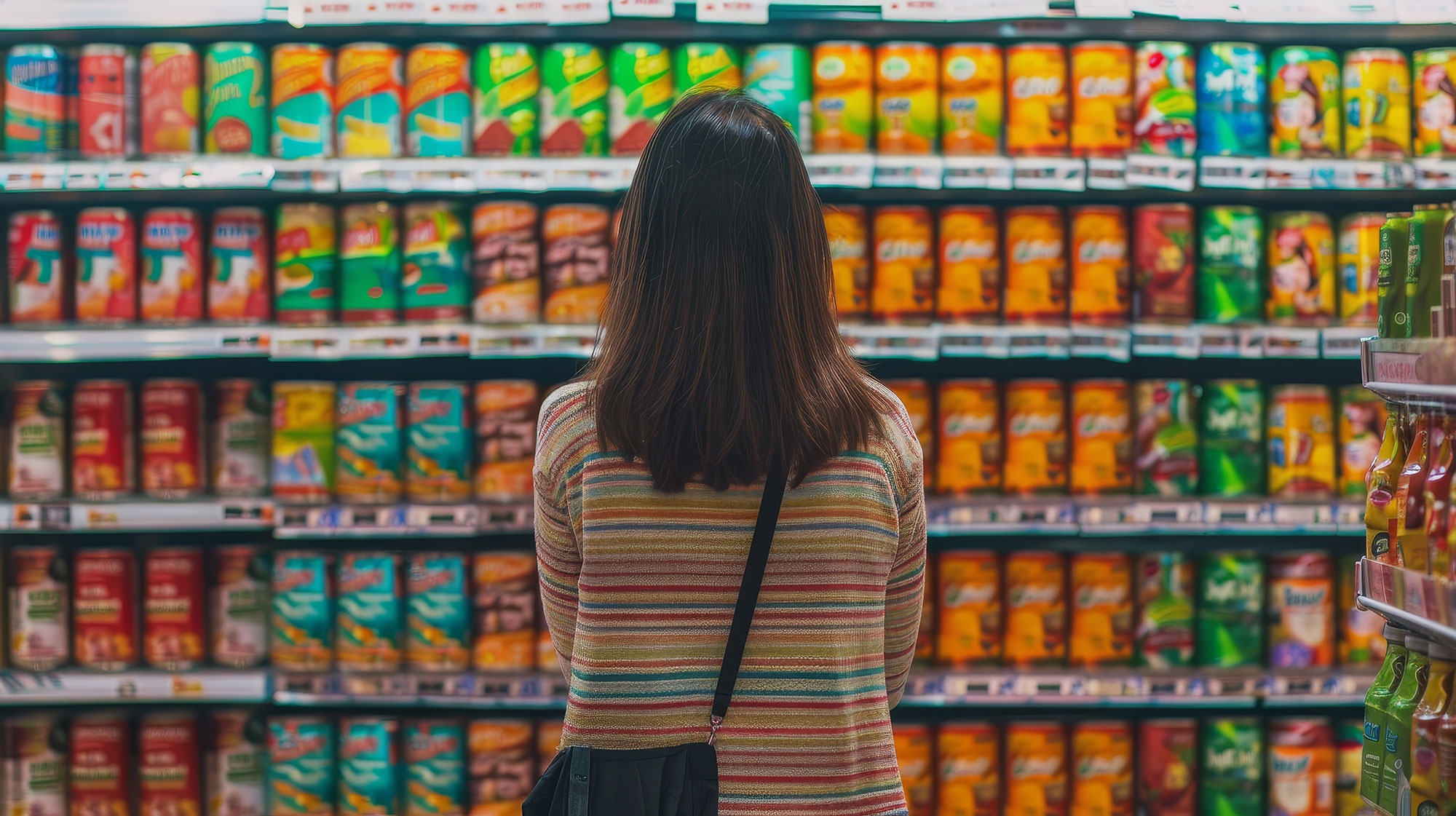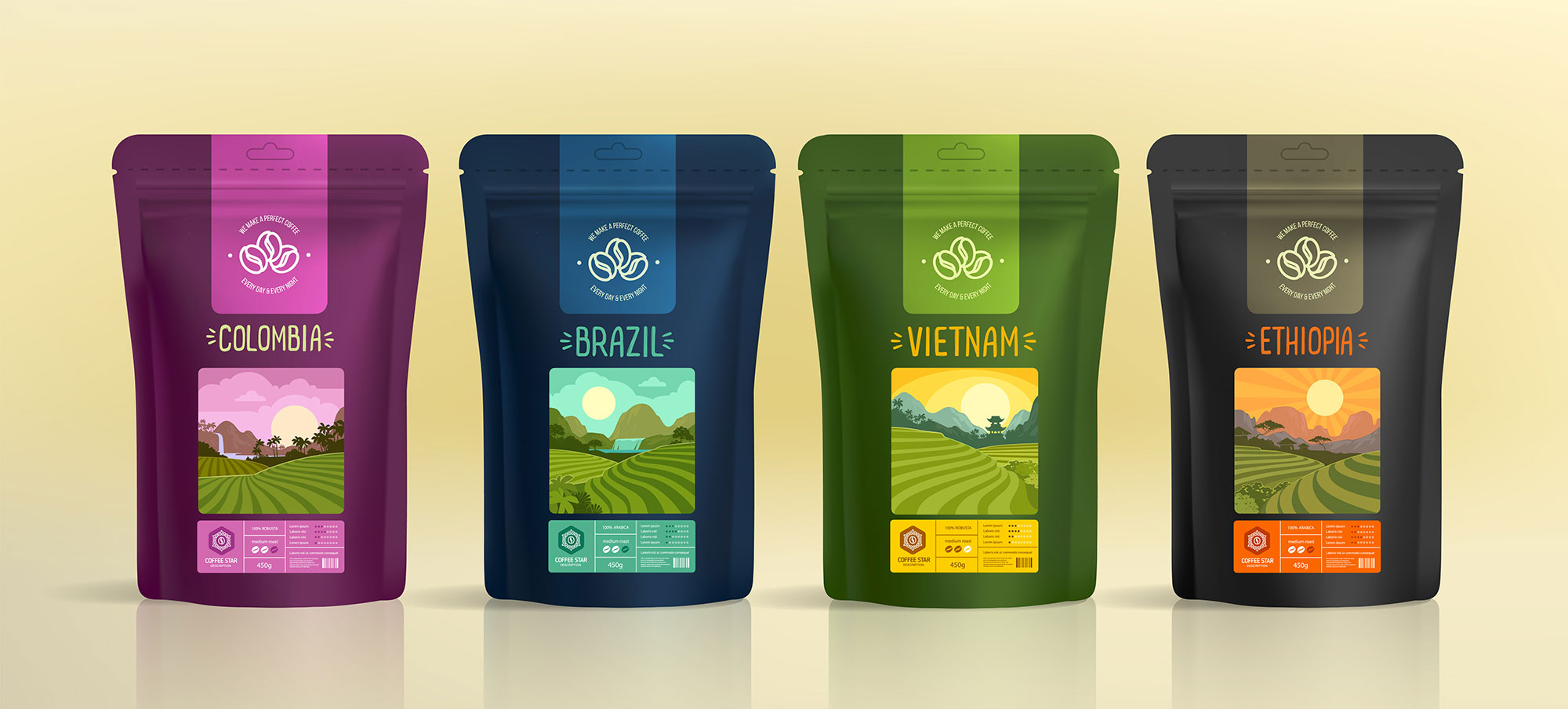
The Coffee Shop's owner did the math: over one year, they'd spent more on unused labels than they would on a color label printer.
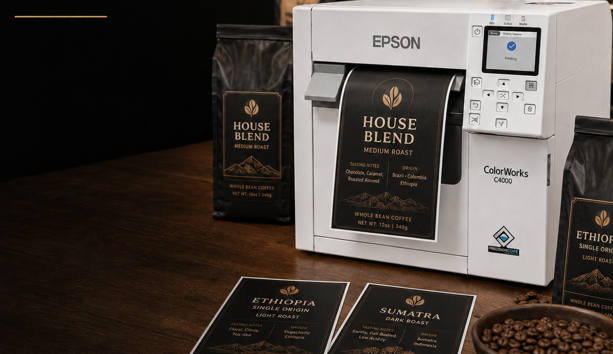
If you roast coffee in small batches, you already know the tension: every bag needs a label, but no two batches are quite the same. A new single-origin lot comes in. A roast date changes. A wholesale account wants their own private-label design. A seasonal blend needs to move from concept to shelf in a week, not a month.
Most small roasters start out ordering pre-printed labels in bulk, because that's how the industry has always done it. It feels efficient until you look closer:
• Minimum order quantities force you to buy thousands of labels for a coffee you may only produce a few hundred bags of.
• Roast dates and lot numbers still need to be hand-stamped or overprinted after the fact, an extra step, and an extra place for errors to creep in.
• Design changes mean tossing unused inventory and waiting weeks for a reprint.
• New SKUs, new origins, new wholesale accounts all multiply the number of label variants you must warehouse and manage.
On-demand color labeling flips the model: instead of printing thousands of labels and hoping they match future needs, you print exactly what you need, when you need it, directly from a digital file.
That shift matters most for roasters in three specific ways:
1. Freshness claims become accurate, not aspirational. Roast date, lot number, and best-by date can print as part of the label itself, not a sticker added later, every time a batch goes out the door.
2. New coffees launch in days, not weeks. A limited micro-lot, a seasonal blend, or a collaboration bag doesn't have to wait on a print run. You design it, you print it, you ship it.
3. Private label and wholesale become easier to say yes to. Different café accounts wanting their own branding on your roast no longer means separate purchase orders and separate inventories to track, just a different file pulled up on the same printer.
The Epson ColorWorks C4000 is a compact color label printer designed specifically for on-demand applications, producing photo-quality output with broad connectivity options. For a roaster weighing whether to bring labeling in-house, a few specs are worth knowing:
• It prints at up to 1200 dpi resolution using variable droplet sizes, which means crisp, photoquality graphics and barcodes that scan cleanly, important if you're running your bags through a POS or inventory system.
• It's built on Epson's PrecisionCore technology, engineered for reliability, a real consideration when your labeling machine has to run every packaging day, not just occasionally.
• Print speeds up to 4 inches per second eliminate the need to keep pre-printed labels on a shelf at all.
• The printer is water- and dust-resistant, with a compact footprint built for tight commercial workspaces a fit for a roastery floor rather than a dedicated print room.
• It integrates with ZPL II, ESC/Label, SAP, and most major middleware, plus Windows, Mac, and so it can plug into whatever design or inventory software you're already using.
• Optional Wi-Fi connectivity supports printing from iOS and Android devices, useful if your label files live in the cloud rather than on one dedicated workstation.
• It's RoHS compliant, recyclable, and part of Epson's SmartWay Transport Partner program, worth noting if sustainability is part of your brand story, as it is for many specialty roasters.
Among Epson's ColorWorks C series, the C4000 is the entry point into professional color label printing, a compact desktop unit that still delivers serious production capability. For a roaster producing anywhere from a few dozen to a few thousand bags a week, it's sized for exactly that stage of growth: applications needing labels wider than 4.4 inches would need to look at the larger C6500P or C8000, but most retail coffee bag formats fall comfortably within the C4000's range.
It's tempting to frame on-demand labeling purely as a cost story and there is one. Businesses that have moved from pre-printed stock to on-demand color printing have reported meaningful reductions in label costs by eliminating unused inventory and minimum order waste. But for a small roaster, the bigger win is agility: the ability to test a new blend without committing to a print run, to say yes to a wholesale account's branding request without a logistics headache, and to correct a roast date typo in seconds instead of scrapping a box of labels.
Roasters who've made the switch describe keeping a single master template and adjusting text, adding promotional badges, or updating ingredient lists in minutes rather than weeks, which matters as much for a seasonal harvest blend as it does for a recipe tweak on your house espresso.
If you're still buying labels in bulk and manually overprinting roast dates, or if you've turned down a private-label wholesale opportunity because the label logistics felt like too much, on-demand color printing is worth a serious look. The C4000 isn't built for enterprise-scale beverage manufacturing, it's built for exactly the stage many independent roasters are in: growing, diversifying their offerings, and needing labeling to keep pace without becoming its own department.
Ahearn & Soper Inc. has provided barcode and identification hardware, software, supplies, and services since, and we work with roasters and small food and beverage producers to figure out whether on-demand labeling makes sense for their specific volume, label sizes, and compliance needs, not just to sell a printer.
Curious whether the ColorWorks C4000 fits your roastery? Reach out to our team for a walkthrough of the printer, compatible label media, and what the switch would actually look like for your current packaging line.
Browse more practical insights connected to warehouse management, automation, labelling, mobility, and support.