Large label orders quickly become outdated, increasing waste, compliance risks, and costs as products, regulations, and branding change.
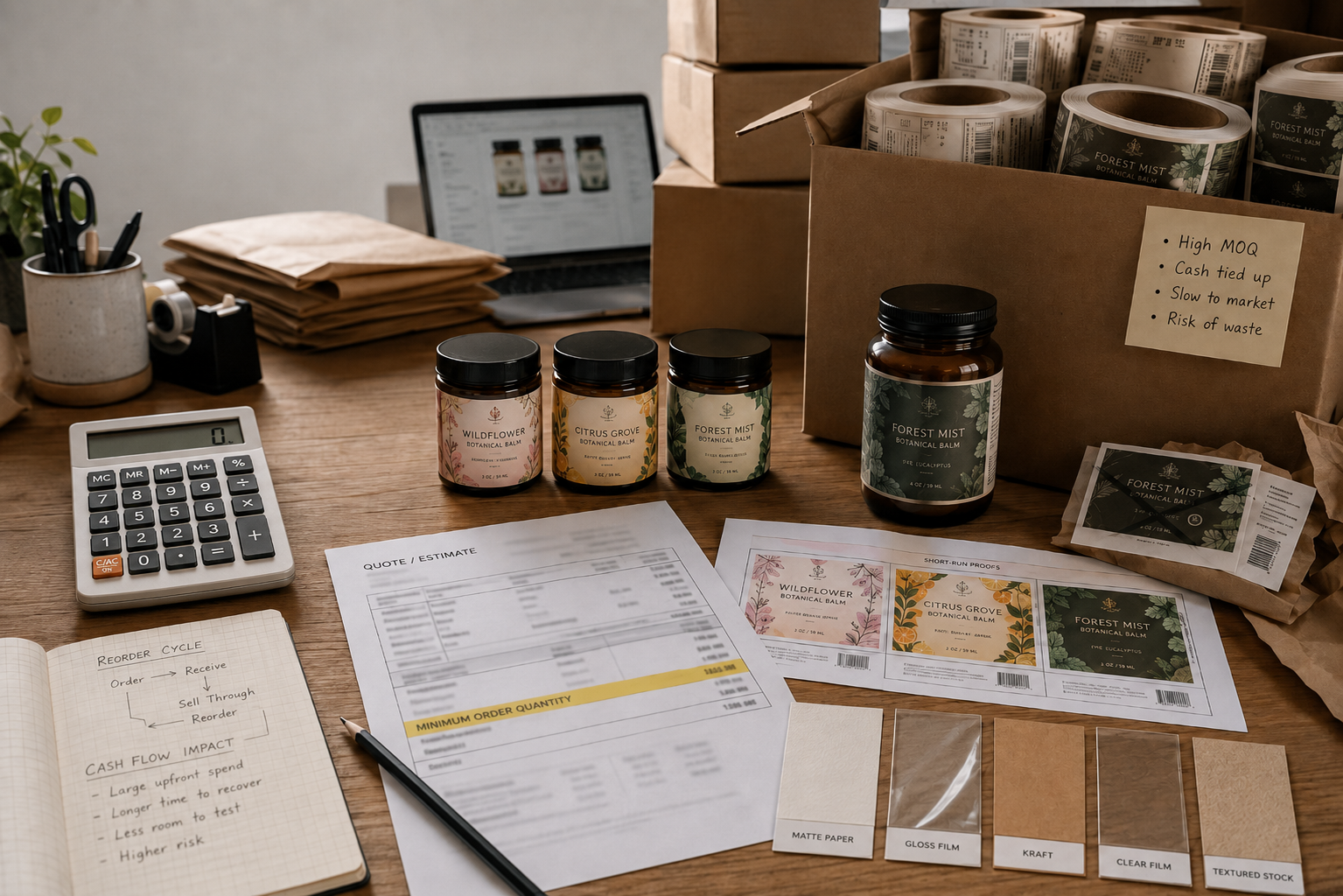
Walk into the garage, closet, or back room of almost any product founder who's been at it longer than a year, and you'll eventually find the box. Sometimes two or three. Labels that were once a great deal and are now completely useless, not because they're damaged, but because they're no longer true.
This is the mistake almost nobody warns you about. It's not that you ordered too many. It's that labels expire, and big runs expire in bulk.
A label is a snapshot of your product at one moment. Products move. Here's what quietly invalidates a box of perfectly good labels:
New ingredient, new supplier, new formula, and now your ingredient list is wrong on every label printed before the change.
If your price is printed on the label, a single price increase obsoletes the whole batch.
You moved, switched your website, changed your support email.
Labeling rules shift, especially in food, beverage, beauty, and supplements and "we already printed those" is not a defense.
New logo, new name, new look. The old labels become a museum exhibit.
An inaccurate label isn't just embarrassing. In regulated categories, a wrong ingredient line or a missing required disclosure is a compliance problem, the kind that can get a product pulled. Short-run printing exists partly because of this: you print current, accurate labels in the quantity you'll use before the next change, instead of stockpiling a version that might be illegal in six months.
This is the cruel multiplier. The whole appeal of a giant run is the low per-unit price. But the bigger the run, the longer it sits, and the longer it sits, the more likely something changes before you reach the bottom of the box. You optimized for cost-per-label and accidentally maximized your exposure to obsolescence. The "cheap" labels become the most expensive ones you've ever thrown away.
On-demand printing turns the whole problem off. You print what you'll use in the near term, and when something changes, you simply upload the corrected file and reorder. No plates to remake, no obsolete stockpile, no compliance time bomb in the garage. Your labels are accurate as of now, not "as of whenever you placed that big order."
The box in the garage isn't a storage problem. It's a planning one. And the plan that prevents it is simple: stop buying labels for a product that doesn't exist yet.
Keep your labels current and compliant. [Order a short run] and reprint the moment anything changes no plates, no minimums, no obsolete boxes.
Browse more practical insights connected to warehouse management, automation, labelling, mobility, and support.