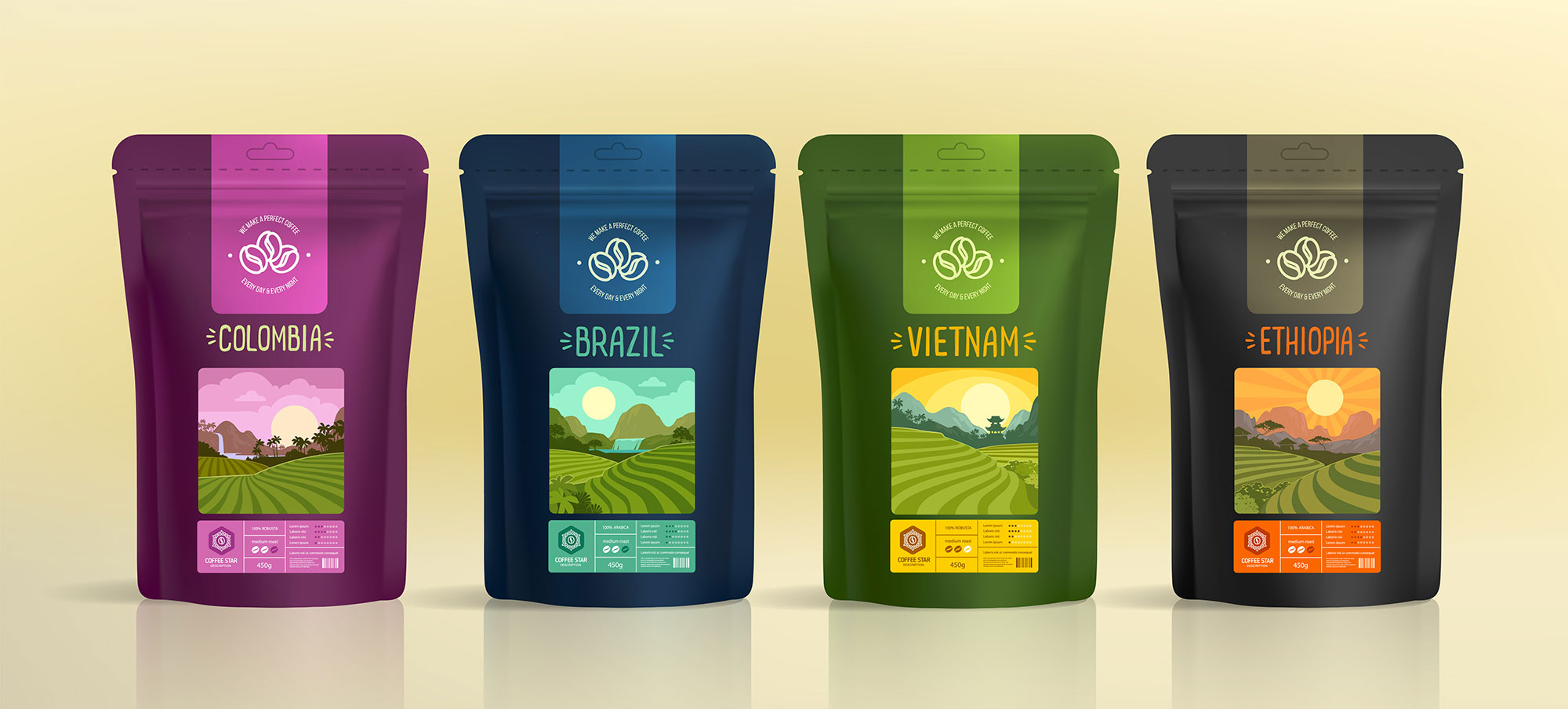
With the C4000 printing labels in exact quantities, batch by batch, the cost of trying something new dropped from "meaningful financial risk" to "cost of a bag of beans."
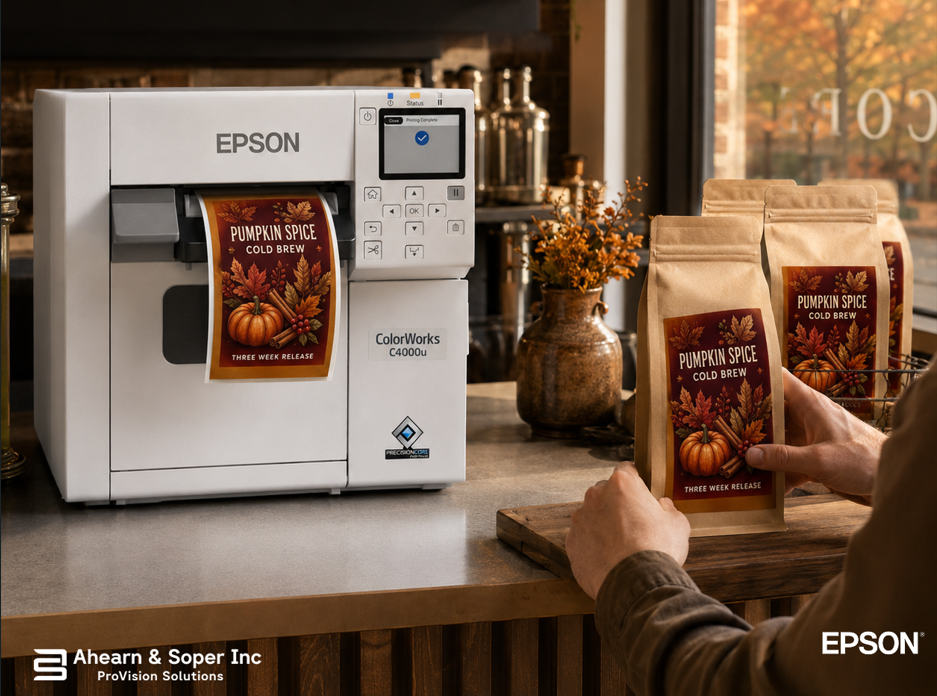
A distributor calls with a one-time opportunity: 60 bags of a rare Panama Geisha lot, exclusive to their store, in time for a weekend event. A regular customer asks if you'd ever do a small batch honey-processed lot just for the subscription list. A local brewery wants to collaborate on a coffee stout and needs 100 bags with a co-branded label.
Every one of these is a "yes" that grows your brand, deepens a relationship, or tests a product you might scale later. And under a pre-printed labeling model, every one of them is also a "no" waiting to happen, because the label math doesn't work.
That's the real cost of pre-printed labels: it isn't just what you spend on labels you don't use. It's the revenue and relationships you turn down because saying yes isn't worth the hassle.
When a label run requires a large minimum order, a roaster evaluating a limited release isn't really asking "is this a good opportunity?" They're asking, "can I justify printing thousands of labels for a run of 60 bags?" The second question kills good opportunities before the first one gets a fair hearing.
The math never favors small runs. A minimum order of 1,000–5,000 labels for a 60-bag release means paying for labels you'll never use, often more than the labels for the coffee you're shipping.
Lead time kills timeliness. A pre-printed order can take weeks to arrive. A weekend pop-up, a limited harvest, or a timely collaboration doesn't wait for a print house's queue.
Every "yes" adds permanent overhead. Each one-off label design becomes inventory to store, track, and eventually write off, even after the opportunity has passed.
The result is a quiet bias toward saying no, even when the opportunity itself is a good one.
On-demand printing doesn't just lower costs, it changes the shape of the decision. Instead of weighing an opportunity against a large, fixed print commitment, you're weighing it against the actual, marginal cost of the labels you'll use.
That's a fundamentally different calculation. A 60-bag exclusive stops being a print-run problem and becomes a straightforward question: is this worth the ink and stock for 60 labels, plus the time to build the design? For most limited releases, the answer is an easy yes.
The economics hold up beyond one-off requests. One craft beverage producer running an Epson ColorWorks C4000 prints 800 custom labels daily across 15 different products for bottles and cans and by moving off pre-printed stock, eliminated roughly $12,000 a year in label inventory and obsolescence costs. That's not a business avoiding variety, it's a business built around it, where the printer is sized precisely for a high-mix, lower-volume production pattern rather than a single high-volume SKU.
For a roaster, the same pattern applies to a portfolio of single-origins, collaborations, and seasonal exclusives: the more product variety you want to offer, the more a fixed per-SKU printing cost works against you, and the more a marginal, print-what-you-need model works in your favor.
The C4000 is priced as an entry point into professional color label printing rather than an industrial capital expense. Independent reviews place it under $3,000 competitive for its class, positioned above entry-level label printers but below the heavy-duty C6000 and C8000 series sized for exactly the kind of growing operation weighing whether limited releases are worth the investment in flexible labeling.
• The C4000 has the lowest initial investment among the ColorWorks C series, though longterm costs should factor in ink consumption, media, and the labor time faster models can save at higher volumes. For a roastery not yet running industrial volumes, that lower upfront cost is usually the right trade.
• The printer produces on-demand labels at a cost comparable to black-and-white thermal transfer printers, while delivering full color, meaning you're not paying a color premium to get the visual quality a limited release deserves.
A limited release label doesn't need to look like an afterthought to be printed economically. That combination, low cost per unit, no minimum order, full color is specifically what makes small, irregular runs viable in a way pre-printed labeling never allowed.
Cost avoidance is only half the business case. Limited releases tend to carry pricing power that regular-rotation blends don't: scarcity, story, and timeliness all support a premium a customer will pay for a coffee they know they can't get again. A roaster who can say yes to more of these opportunities, a competition lot, a farm-direct exclusive, a retailer collaboration has more chances to capture that premium, build press and word-of-mouth around a release, and deepen a wholesale relationship that a flat "no, our minimums don't work for that" would have ended.
None of that shows up as savings on a spreadsheet. It shows up as revenue and relationships that a rigid labeling process would have quietly cost you.
If you're the one who must justify the printer purchase, the strongest argument usually isn't "we'll save money on labels we already print." It's "we'll stop turning down opportunities we can't currently say yes to." That reframes the C4000 from a cost-reduction purchase to a revenue enabling one and it's the more accurate framing, because the biggest expense in the old model was never the wasted labels. It was the releases that never happened.
Ahearn & Soper Inc. offers expert consultation to identify the right solution for your specific needs, including whether your current mix of flagship blends and limited releases justifies the move and what the real numbers look like once minimum orders are out of the equation.
Have a limited release you've been putting off because the label math didn't work? Talk to our team about what saying yes would cost with a ColorWorks C4000 in your workflow.
Browse more practical insights connected to warehouse management, automation, labelling, mobility, and support.